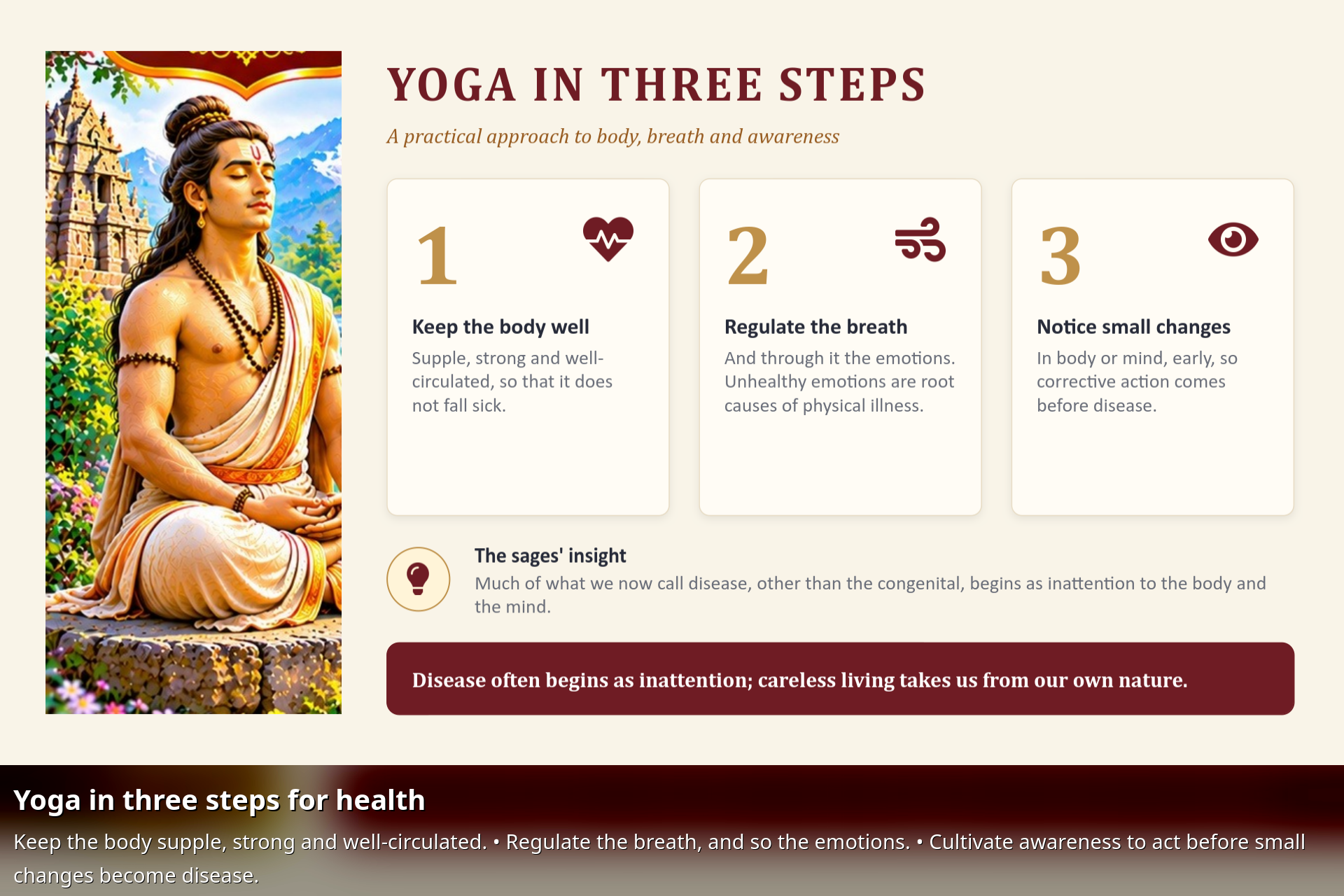


Since time immemorial, Hindus viewed Yoga as a practice to stay healthy. Health was seen as a coordinated operation between the body and the mind. The word comes from the root yuj, to join or to yoke. The body and the mind are the two who are yoked together. They are controlled by the breath that acts as the reins. The holder of the reins is the Jīvātma, a non-translatable word often loosely translated as the living spirit. Hindus saw Yoga not as just a physical exercise but as a means to something larger.
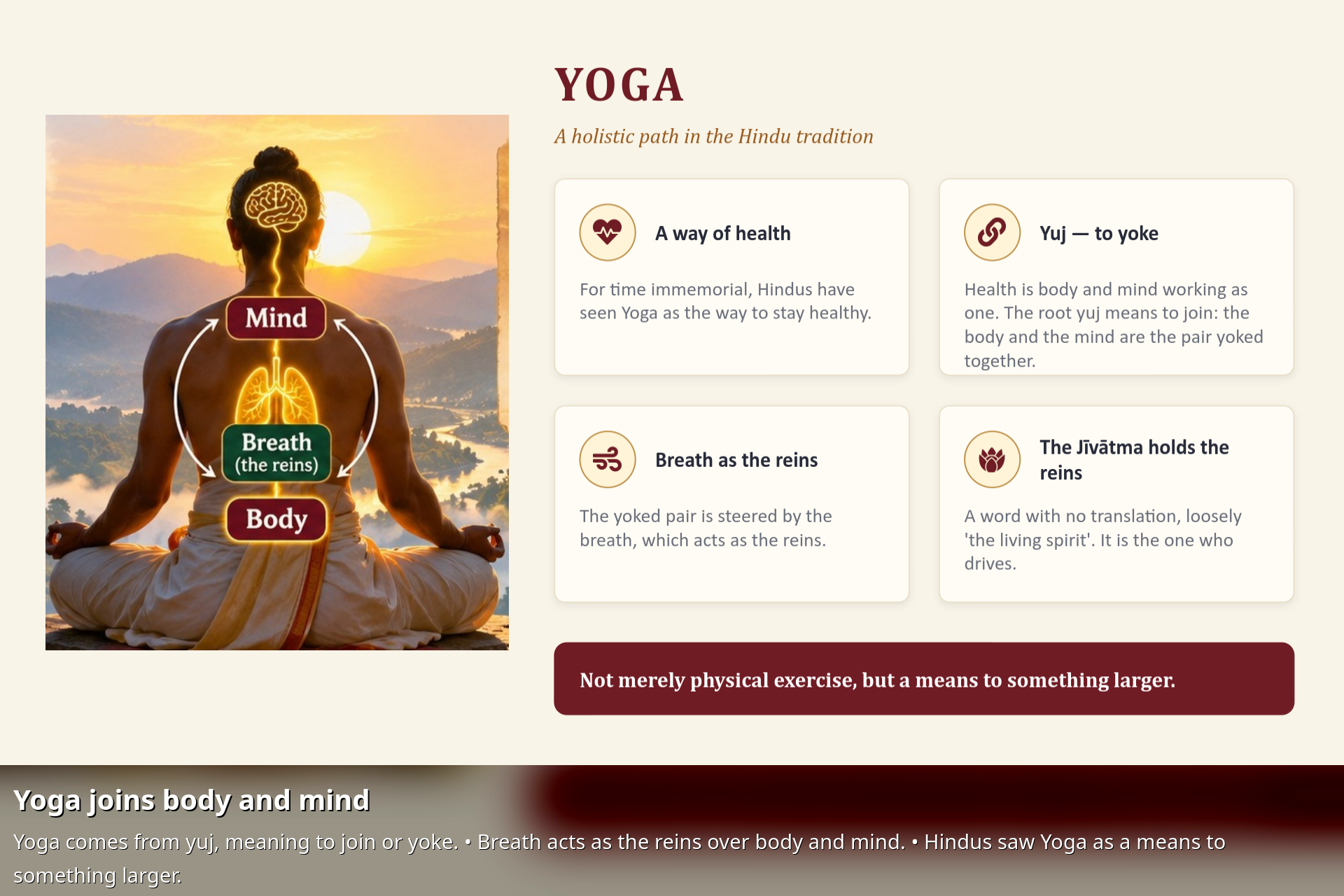
Yoga as a methodology has no known starting date but Western researchers constantly seek to date it. How does one date something that existed for time immemorial? However, seals from the Indus Valley civilisation, dated to roughly 2500 BCE, show a figure sitting in a meditative Yoga posture. Several Upaniṣads discuss the importance of controlling the breath as a start to calm the senses. The Bhagavad Gītā, which is part of the Mahābhārata, describes several paths of Yoga: the Yoga of action, devotion, and knowledge. These define Yoga as an essential element towards the spiritual realisation of one’s true nature. Thus, in these texts Yoga is presented as strengthening the body and mind for a healthy and spiritual life.
Featuring:



The Sage Patañjali systematised the practice in the Yoga Sūtras. Some date this work between…
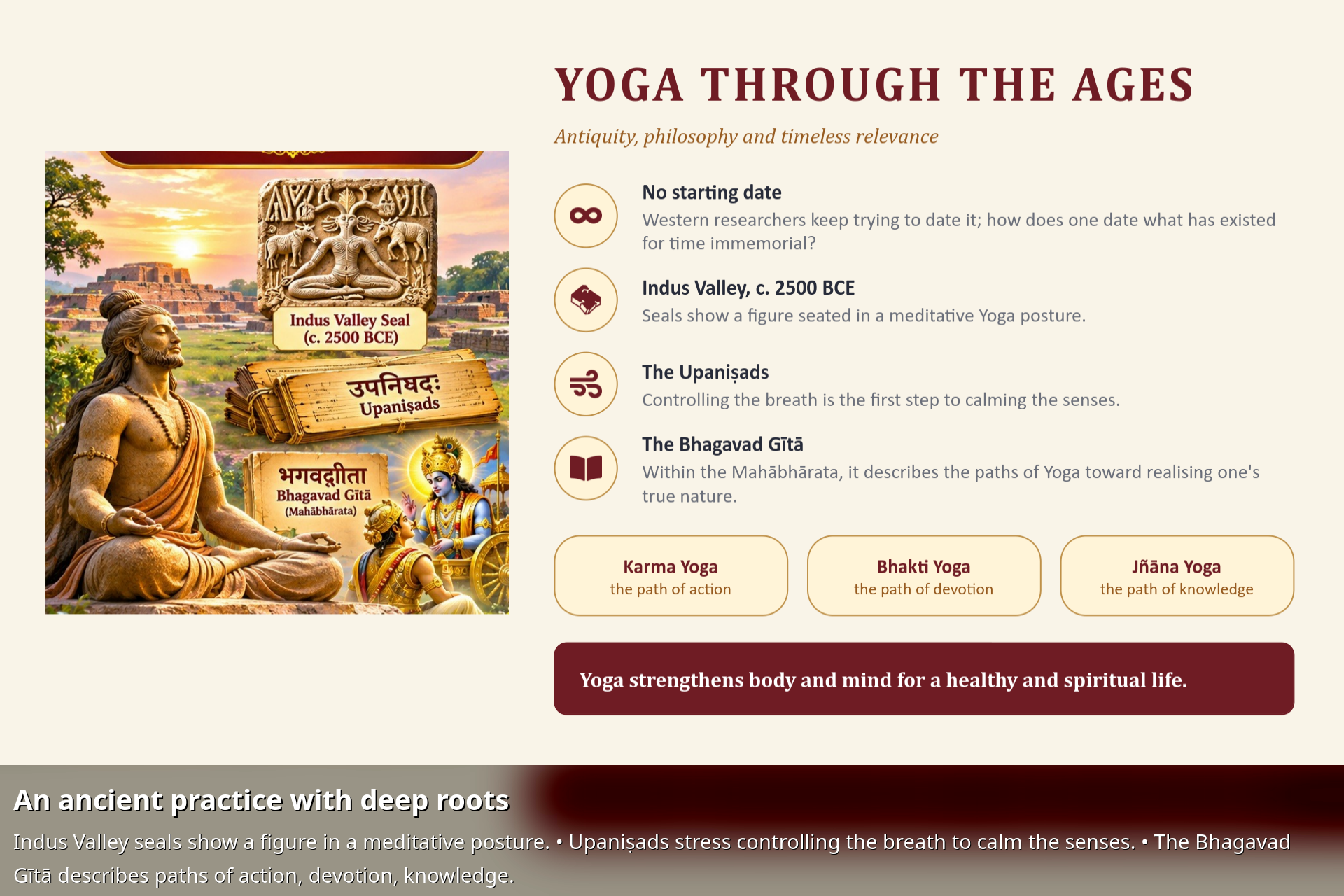
The Sage Patañjali systematised the practice in the Yoga Sūtras. Some date this work between 200 BCE and 400 CE, but these may well be speculation, and it is better not to put too much stock in such theories. Regardless of the date, Patañjali’s work serves as a compendium of Yoga. His definition is terse: yoga is the stilling of the fluctuations of the mind. His method is the eightfold path, aṣṭāṅga, which is a programme of discipline that leads to spirituality.
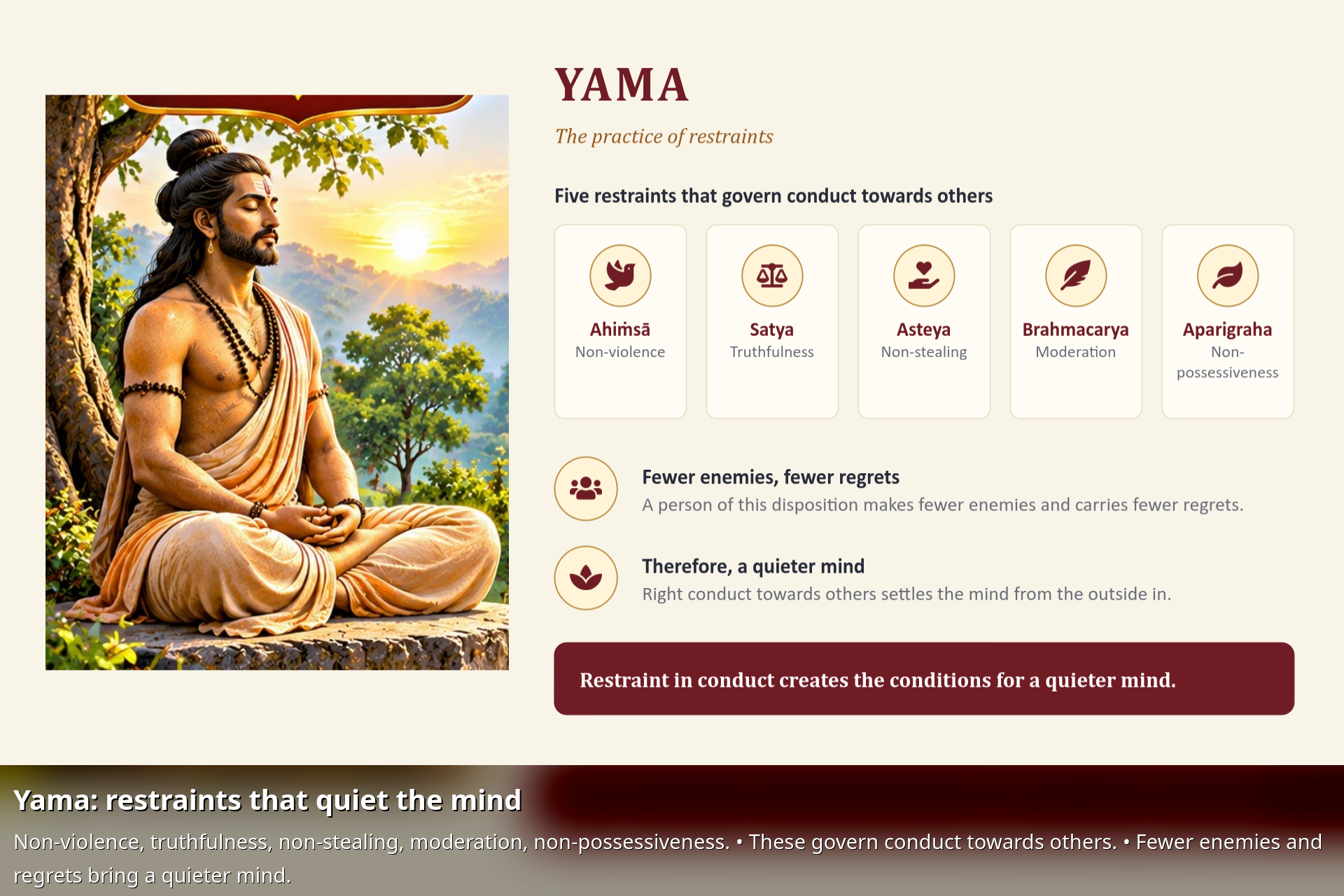
Yama is the practice of restraints. The adherent will practise non-violence, truthfulness, non-stealing, moderation, and non-possessiveness. These govern conduct towards others. A person with this disposition will have fewer enemies and regrets. Therefore, these practices will lead to a quieter mind.
Niyama is the practice of observances. The adherent practises physical and mental cleanliness, contentment, and…
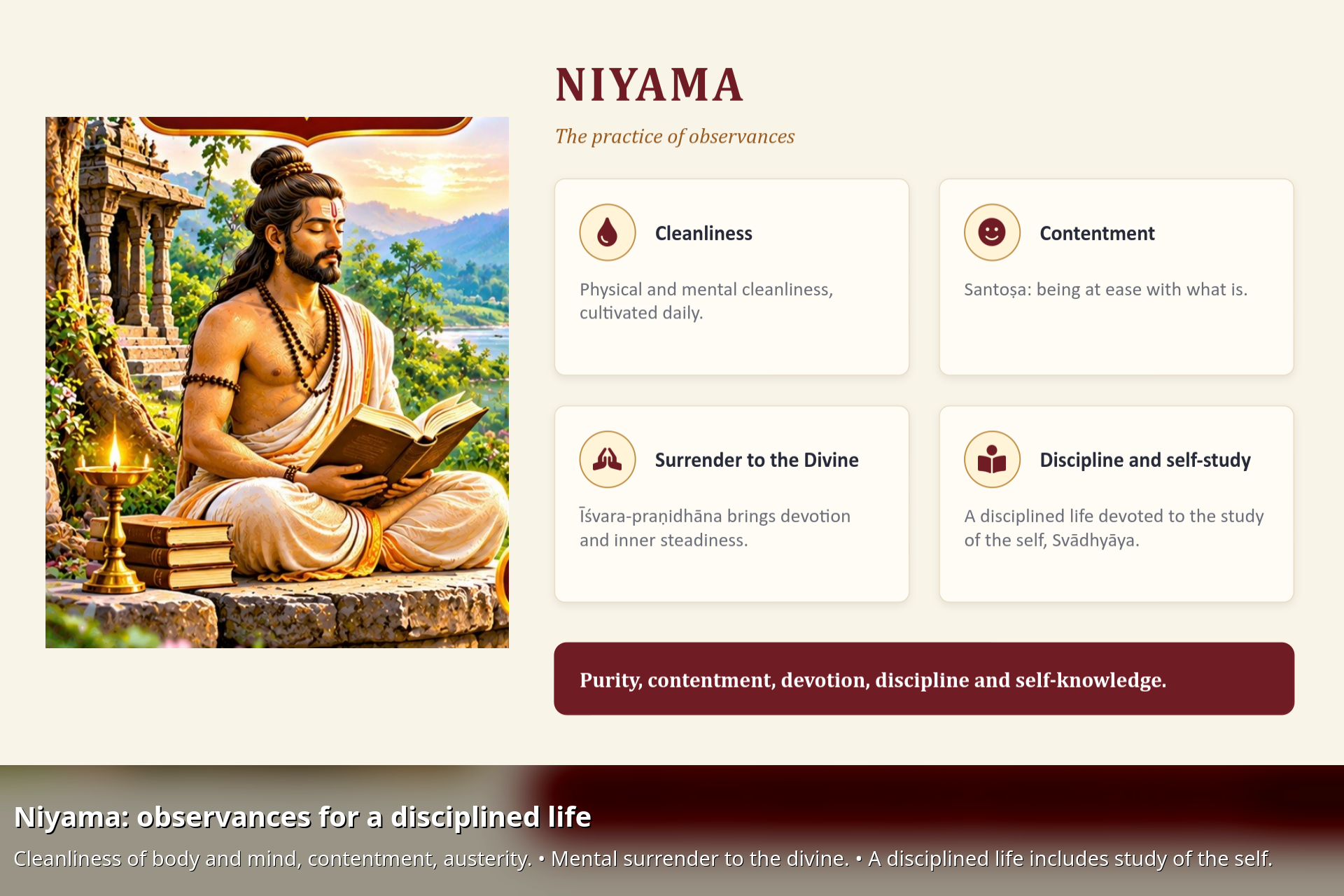
Niyama is the practice of observances. The adherent practises physical and mental cleanliness, contentment, and austerity (tapas). Surrendering mentally to the divine, they will lead a disciplined life engaging in the study of the self.
Featuring:


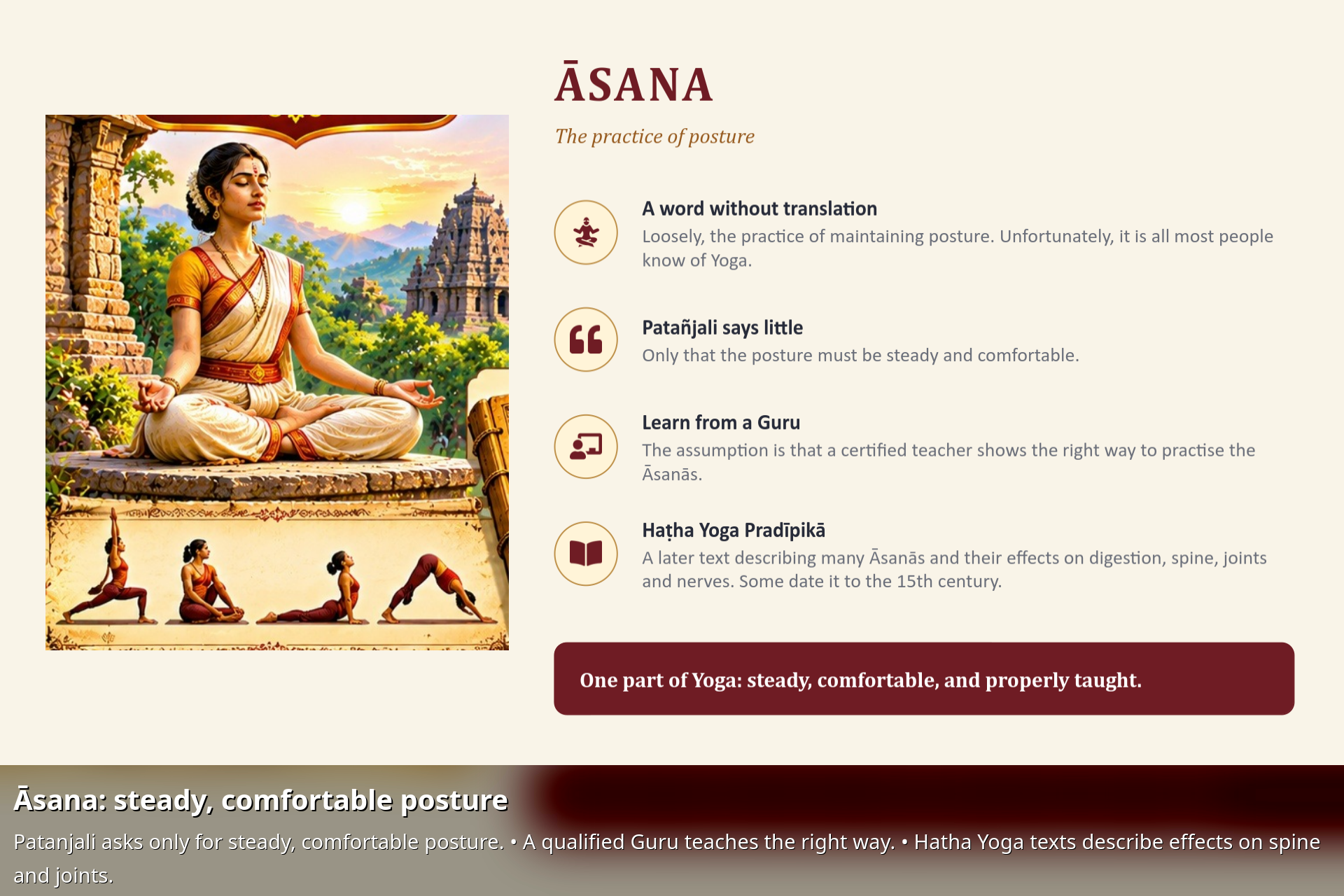
Āsana is a non-translatable word but can be loosely described as the practice of maintaining posture. Unfortunately, this is what most people know when they hear the word Yoga. Patanjali does not delve too much into this except to say that posture should be steady and comfortable. The underlying assumption is that the student will learn from a qualified Guru who will teach the right way to practise these Āsanās. A later text on Hatha Yoga, especially the Hatha Yoga Pradīpikā, describe many Āsanās and their effects on the digestion, spine, joints, and nervous system. Some researchers speculatively date this work to the 15th century.
Prāṇāyāma is the practice of regulating the breath. The Upaniṣads describe the breath as the…
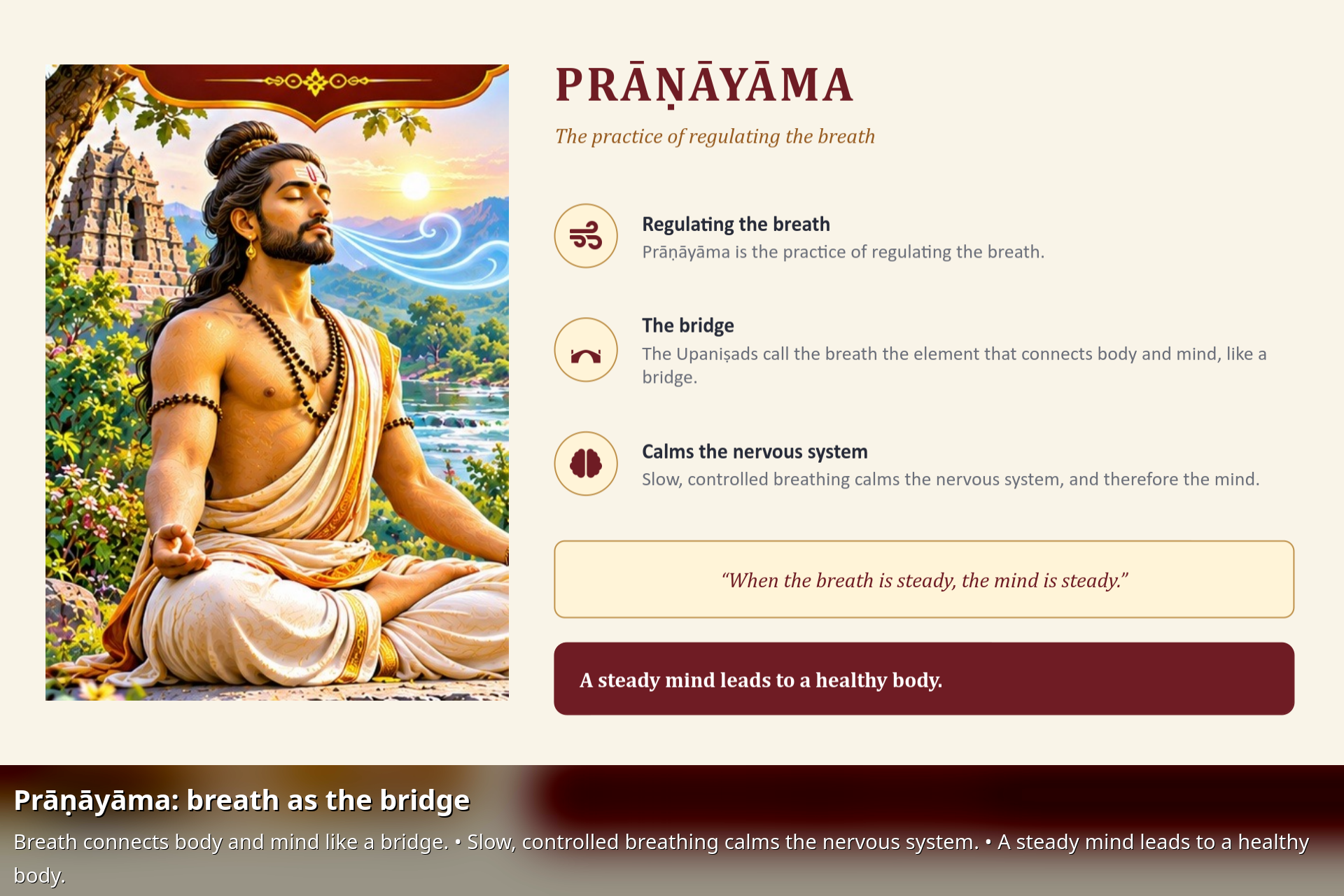
Prāṇāyāma is the practice of regulating the breath. The Upaniṣads describe the breath as the most important element that connects body and mind as a bridge. Slowing and controlling the breath calms the nervous system and therefore the mind. A steady mind leads to a healthy body.
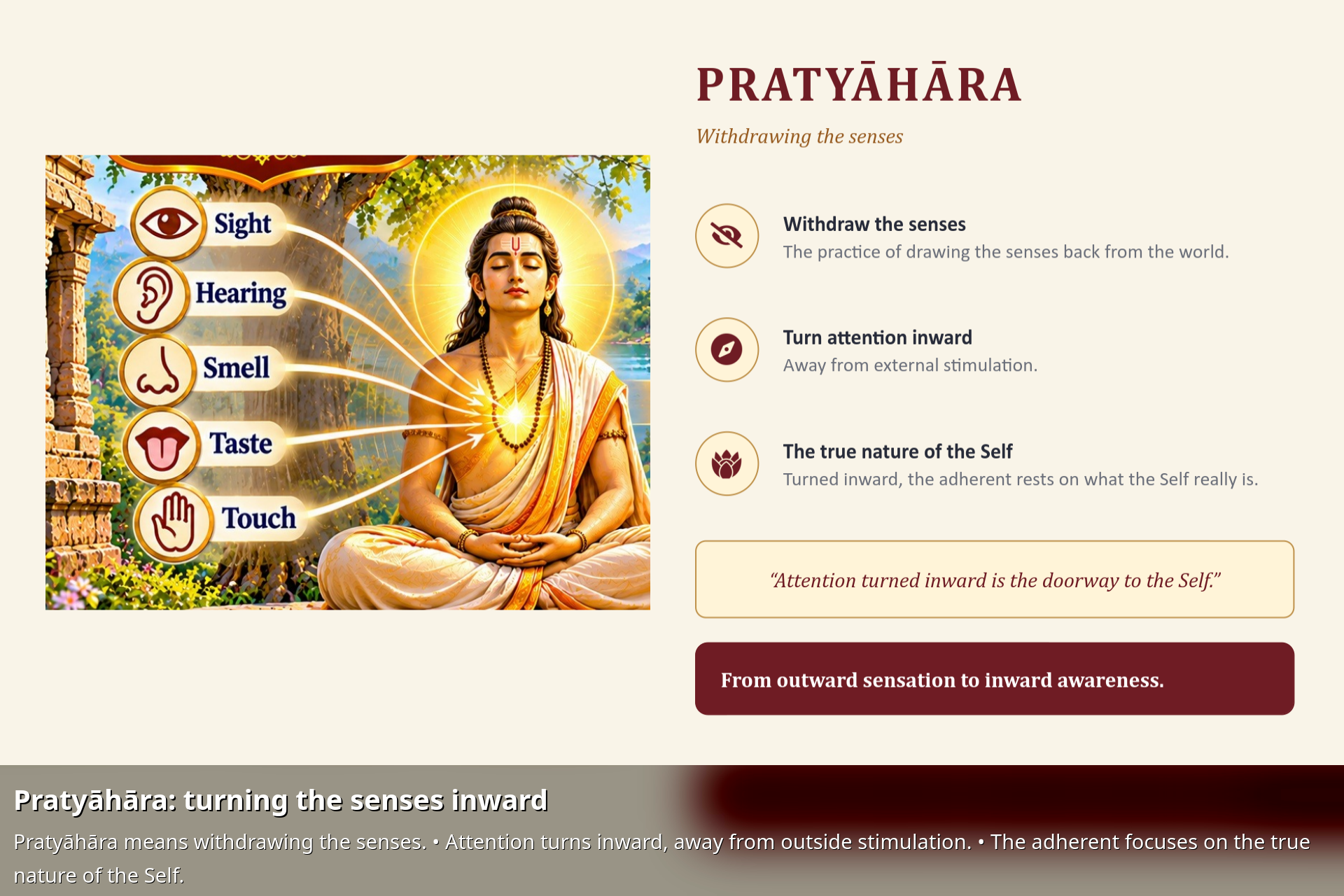
Pratyāhāra is the practice of withdrawing the senses. Turning attention inward, away from external stimulation, the adherent focuses on the true nature of the Self.
Featuring:





Dhāraṇā is the practice of concentration. Holding the mind on a single object or thought,…
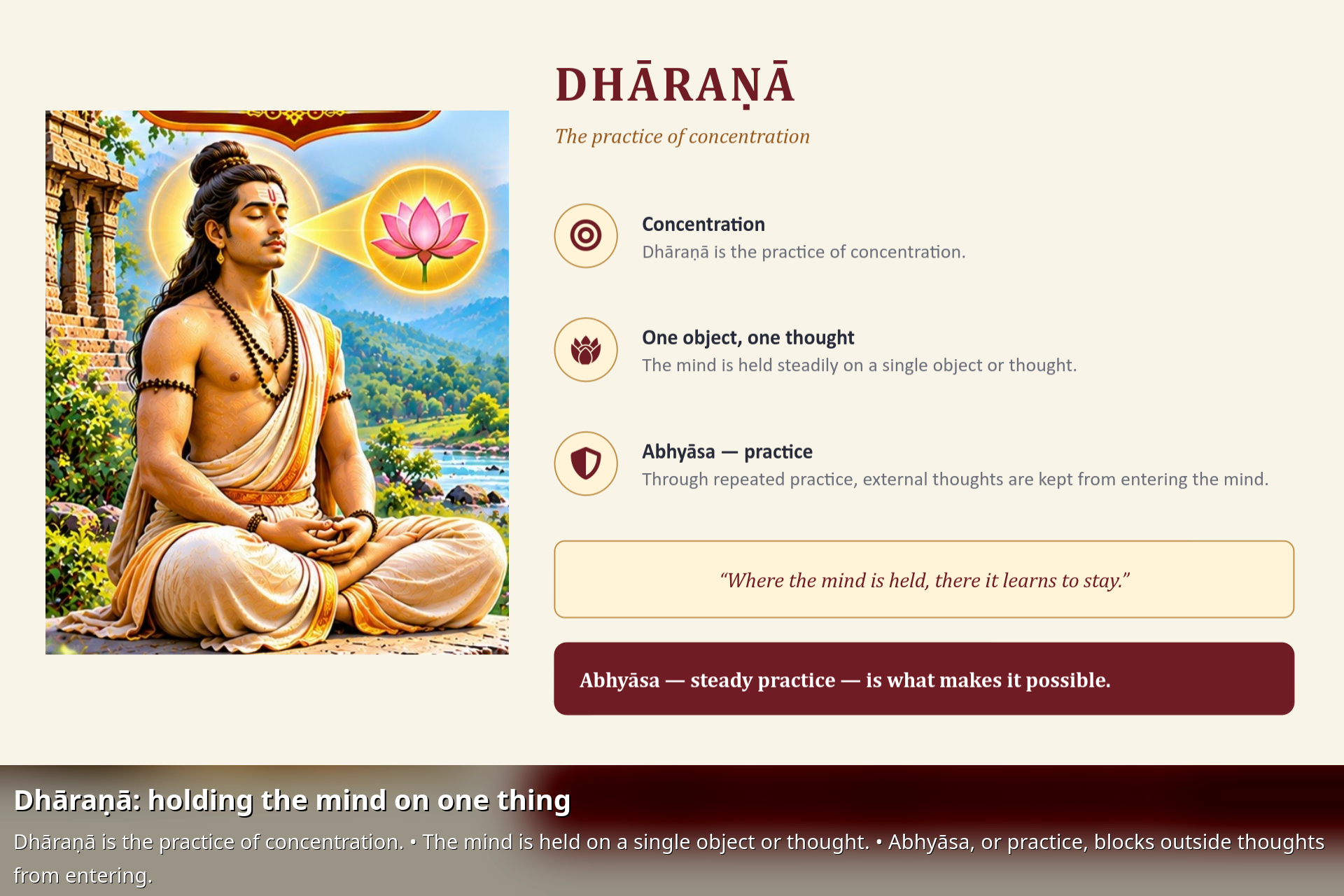
Dhāraṇā is the practice of concentration. Holding the mind on a single object or thought, the adherent blocks external thoughts from entering the mind through Abhyāsa or practice.
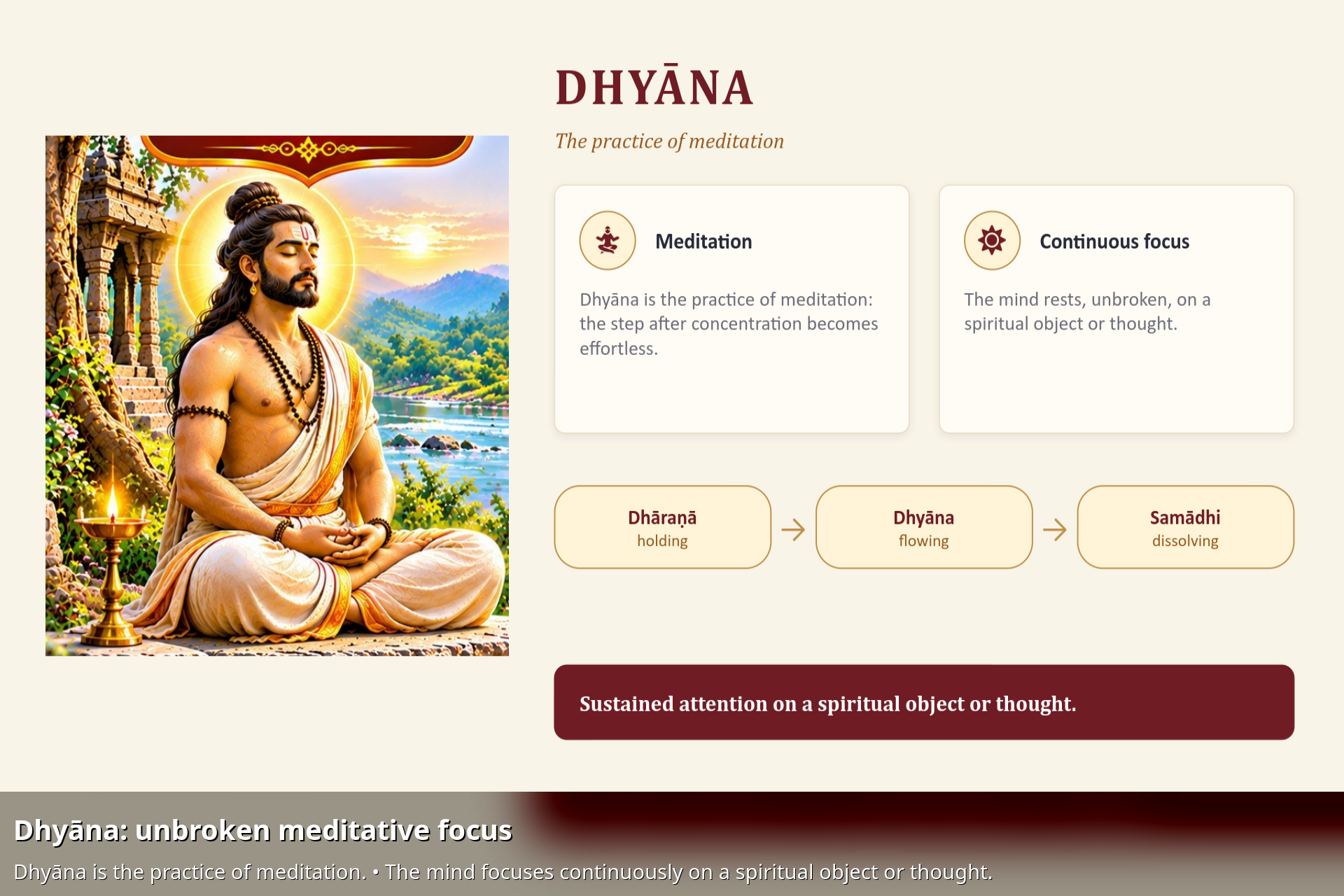
Dhyāna is the practice of meditation where the mind continuously focuses on a spiritual object or thought.
Samādhi is the practice of absorbing all senses into the mind, a state in which…
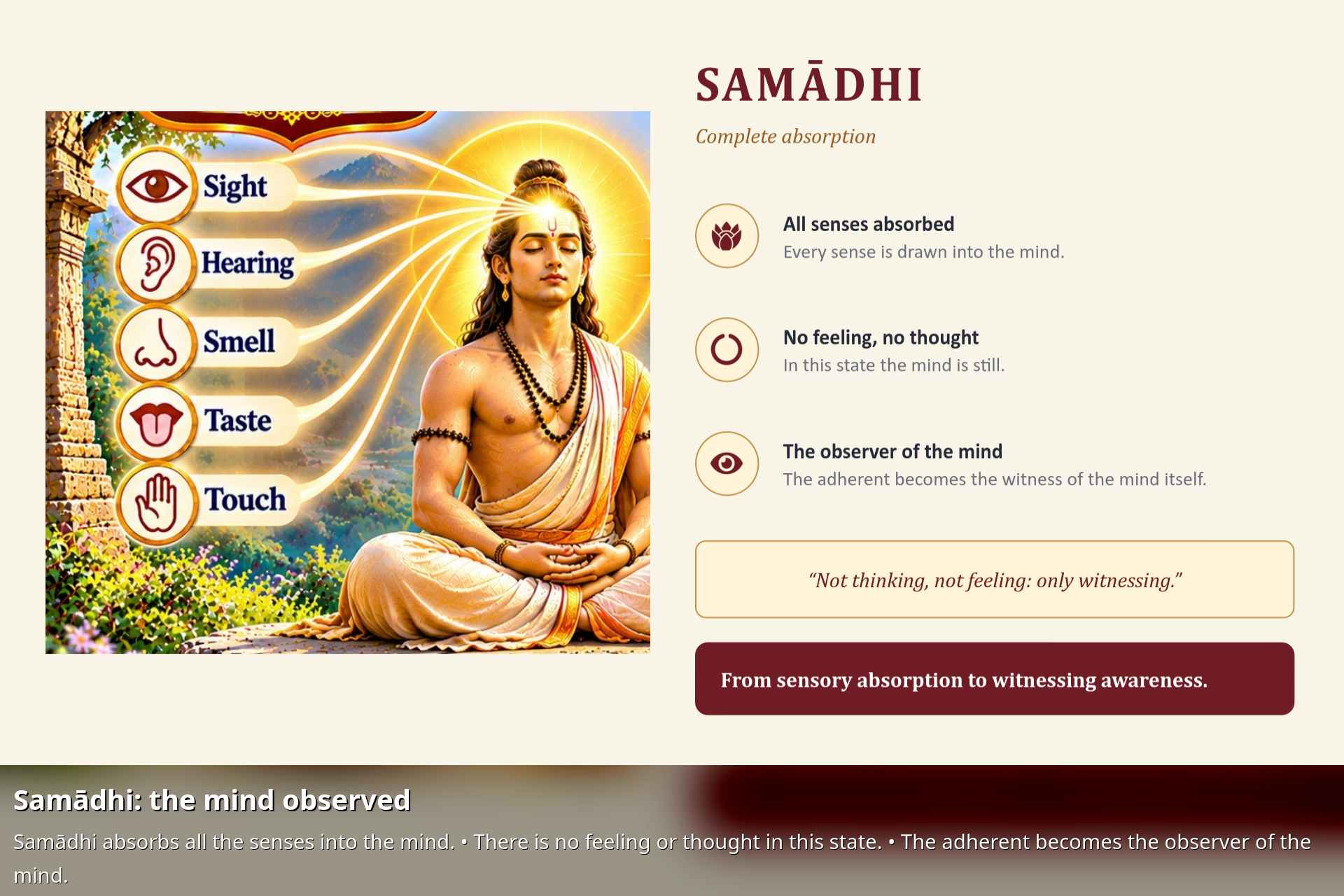
Samādhi is the practice of absorbing all senses into the mind, a state in which there is no feeling or thought and the adherent becomes the observer of the mind.
Featuring:
The first five limbs (the outer limbs) work mainly on conduct, the body and the breath, with Pratyāhāra as the bridge. The last three (the inner limbs) work on the mind. The sequence is deliberate. The body is settled first, then the breath, and only then is the mind asked to stay still. This is the practical form of the three-level model of physical, mental, and spiritual. The big message is that a healthy body and mind are essential requirements for spiritual health.
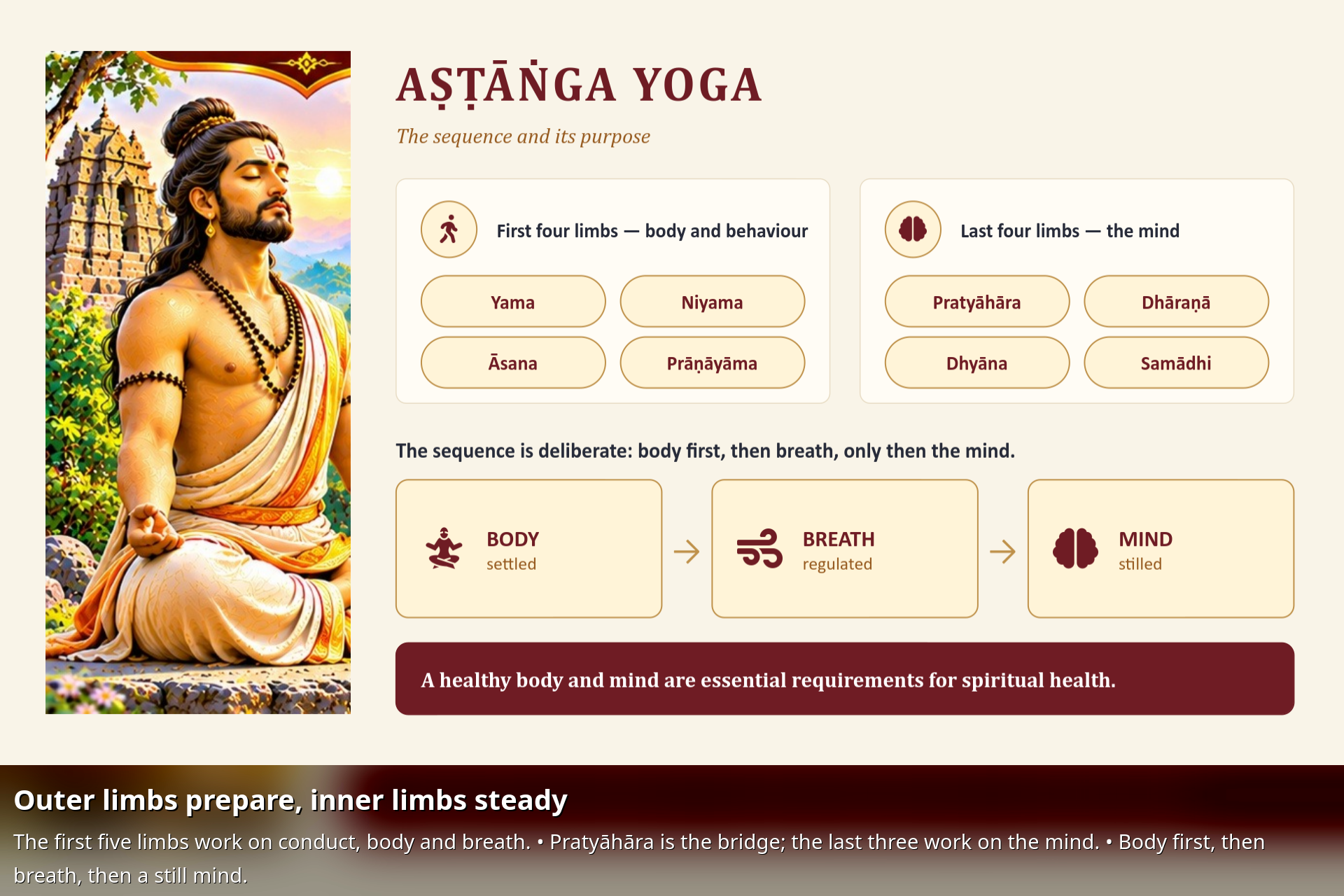
Yoga can therefore be summarised in three steps. Firstly, keep the body supple, strong and…
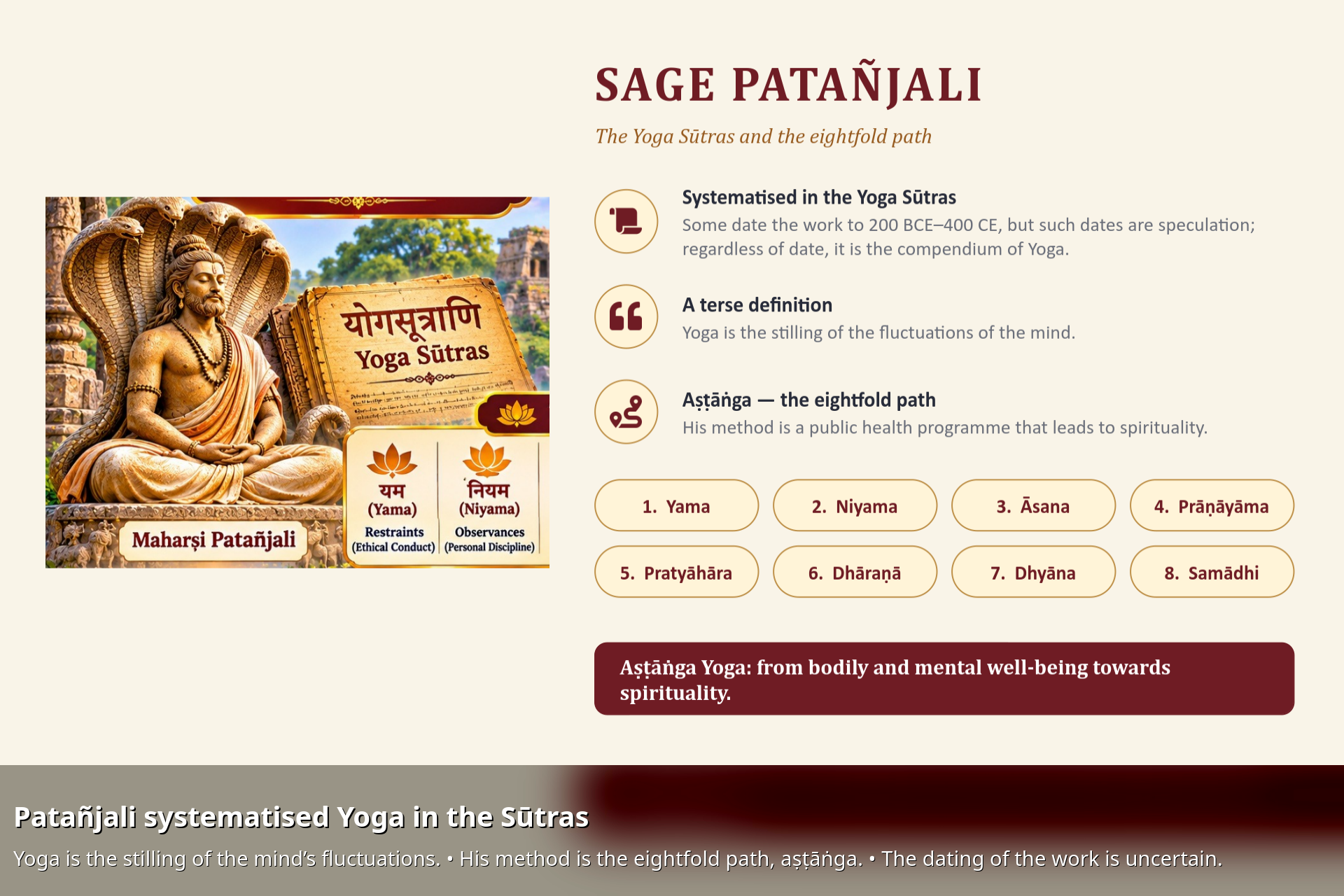
Yoga can therefore be summarised in three steps. Firstly, keep the body supple, strong and well-circulated, so that it will avoid sickness. Secondly, regulate the breath and therefore the emotions. Unhealthy emotions are important triggers for physical illness. Thirdly, cultivate the awareness to notice even small changes in the body or the mind. This will allow the adherent to take corrective action before these changes become disease. Ancient sages understood that much of what we now call disease, other than congenital ones, begins as inattention to the body and mind. Such inattention leads to careless living, even when that way of living goes against one's own nature.