


When India attained independence after 150 years of colonial rule, 100 years of East India Company rule, and 900 years of barbarian invasions, it stood depleted of agricultural self-sufficiency, industry, and wealth. By one estimate (economist Utsa Patnaik, covering 1765–1938 and compounded at 5% interest), Britain stole the equivalent of USD 45 trillion from India by systematically disenfranchising peasants, destroying industries, levying unbearable taxes, dismantling education systems, and creating artificial famines.
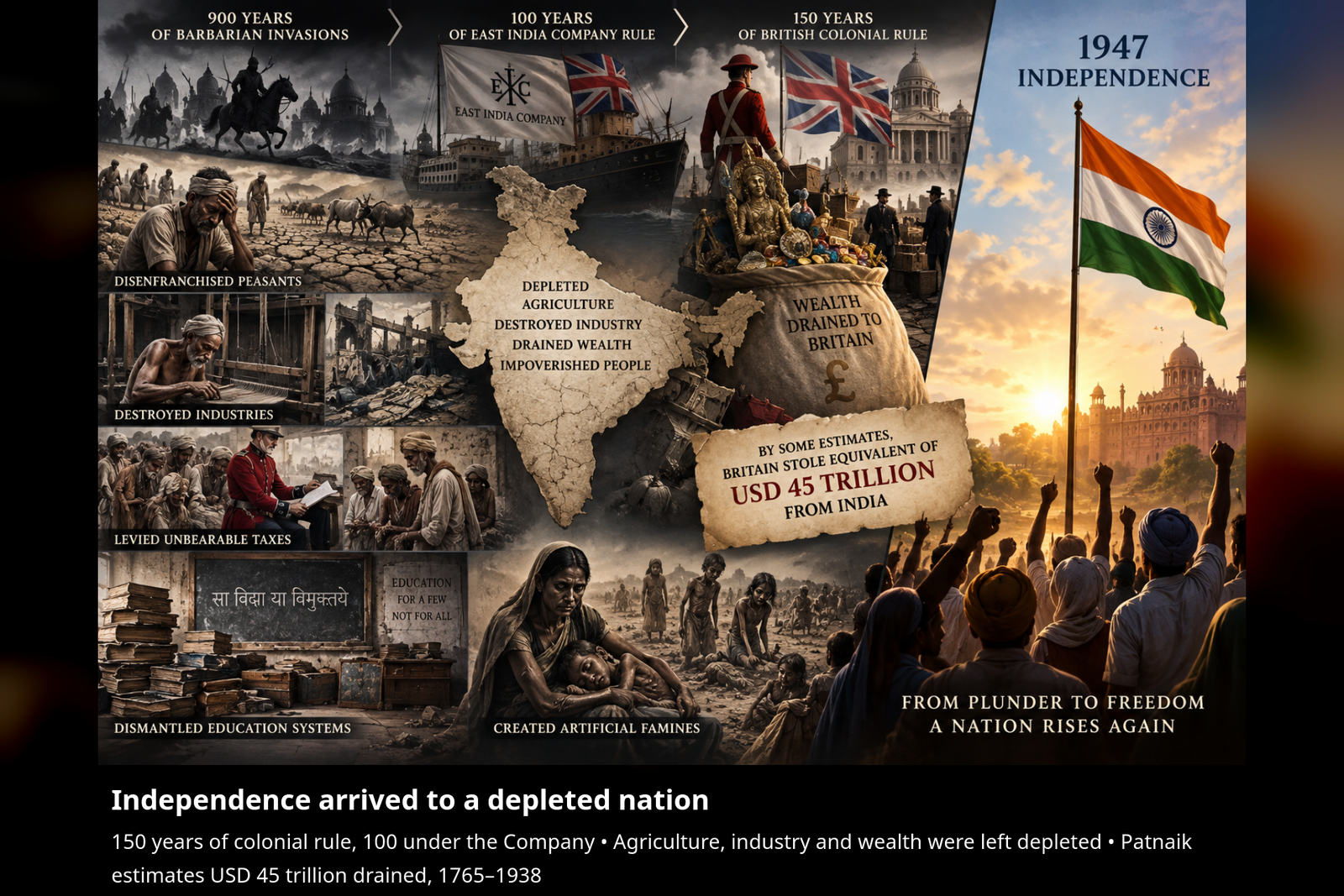
For millennia, stretching from Brunei to Iran and Maldives to Russia, India, that is Bhārath, owned a very large portion of the world's wealth. Islamic hordes that took only years to conquer West Asia and parts of Europe took 900 years to set up a dynasty of any repute. Even then, the Mughal dynasty held real power for only about 180 years (1526–1707) without conquering all of the country. By some estimates, Islamic hordes killed, kidnapped, and enslaved as many as 60–80 million non-combatant Hindus (one scholarly estimate for 1000–1525) in the name of religion and a good majority of them were children.

Featuring:




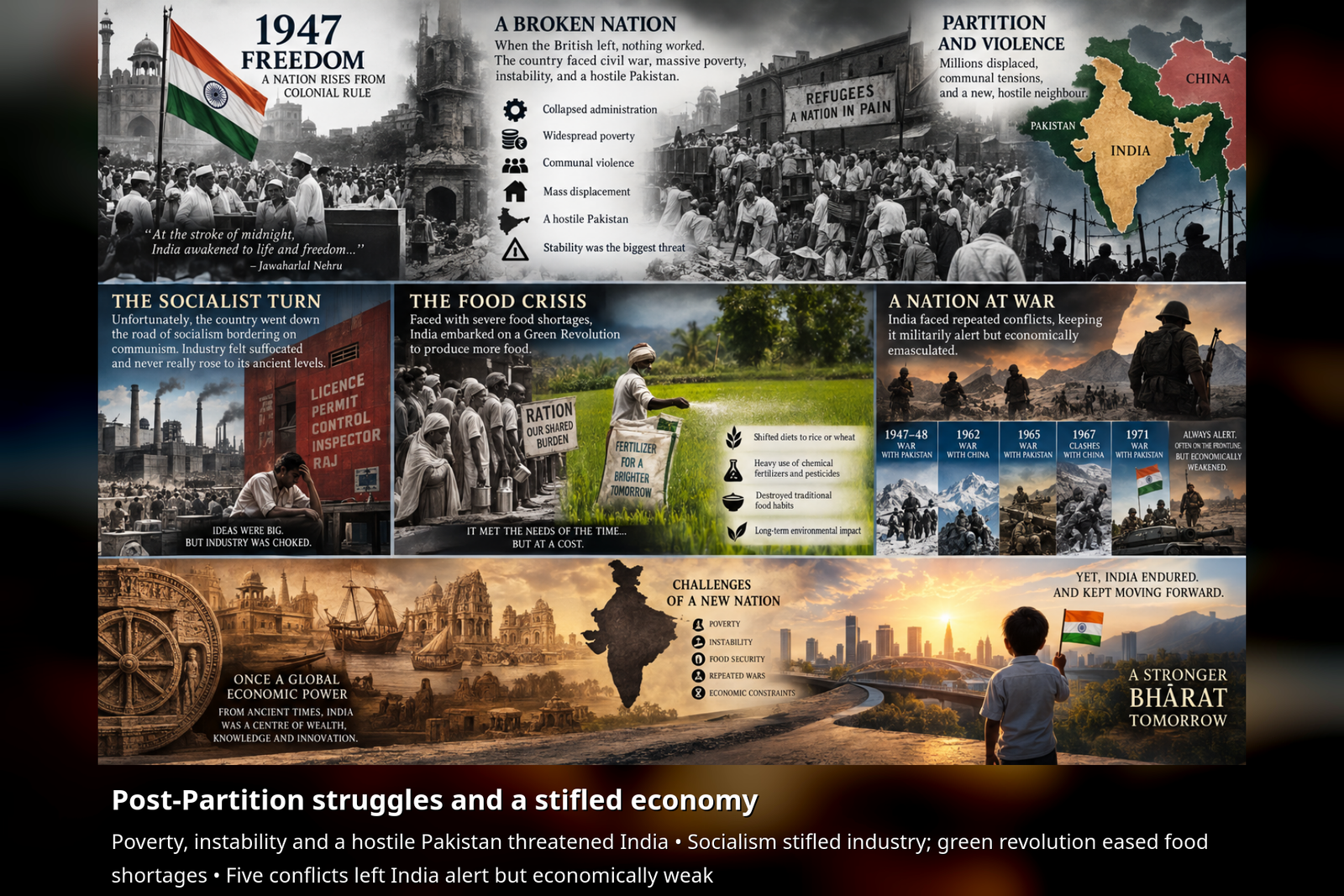
When the British left, with nothing in the country working and amid the communal violence…
When the British left, with nothing in the country working and amid the communal violence of Partition, poverty, instability, and a hostile Pakistan were the biggest threats. Unfortunately, the country went down the road of socialism bordering on communism, and the industry felt suffocated and never really rose to its ancient levels. Faced with severe food shortages, India embarked on a green revolution to produce more food. While this met the requirements at that time, it destroyed food habits by driving people to rice or wheat and infused a huge quantum of chemical fertiliser and pesticide. With the war with Pakistan in 1947-48, China in 1962, Pakistan in 1965, China in 1967, and with Pakistan in 1971, India remained militarily alert but economically emasculated.
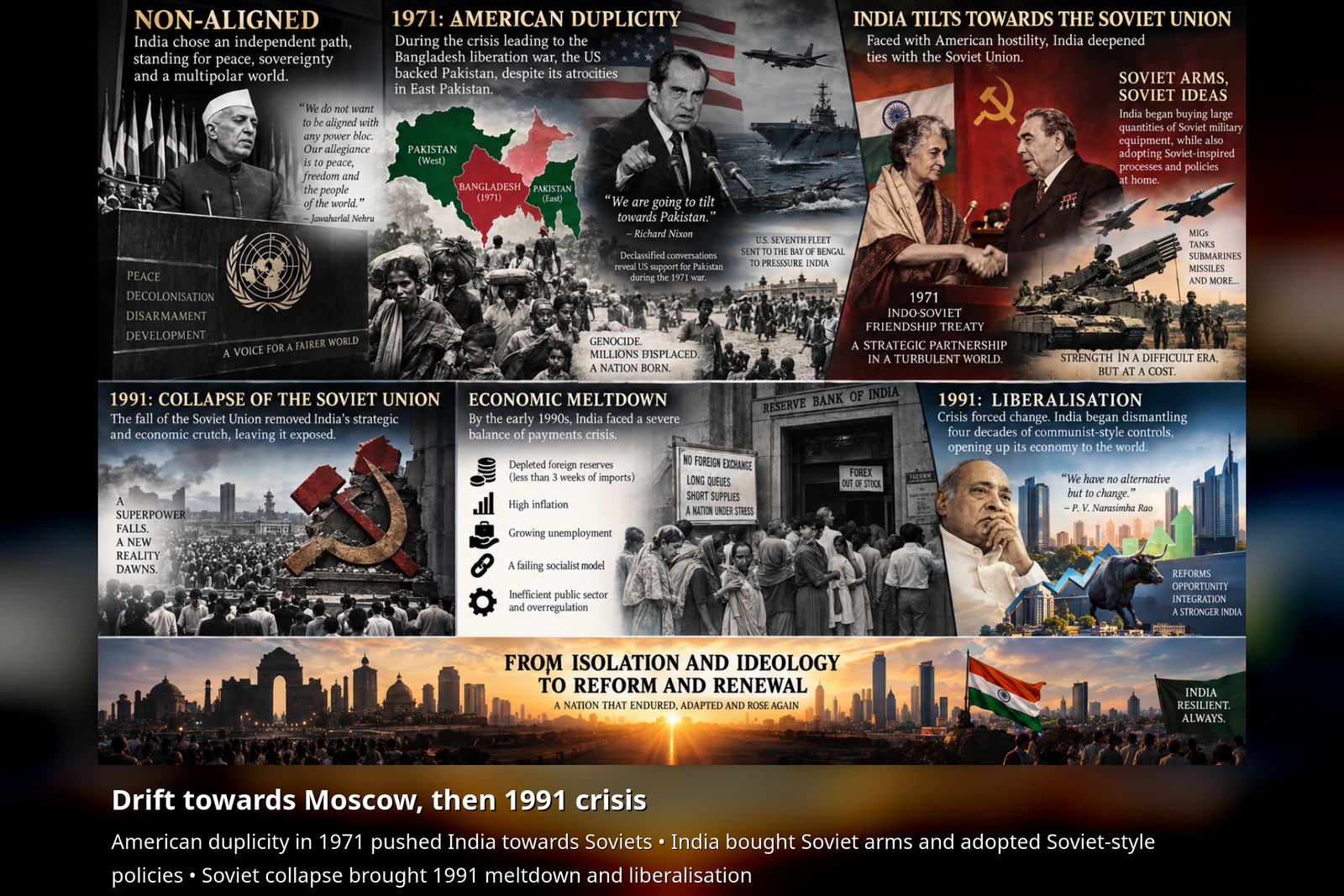
Although India remained non-aligned, American duplicity in events leading to the Bangladesh liberation war with Pakistan during the 1971 war forced India towards the Soviet Union. India embarked on buying more and more Soviet military equipment even as it embraced Soviet-inspired processes and policies. As the Soviet Union disintegrated, India went into an economic meltdown in 1991 forcing it into liberalisation that would dismantle 40 years of communist political frameworks.
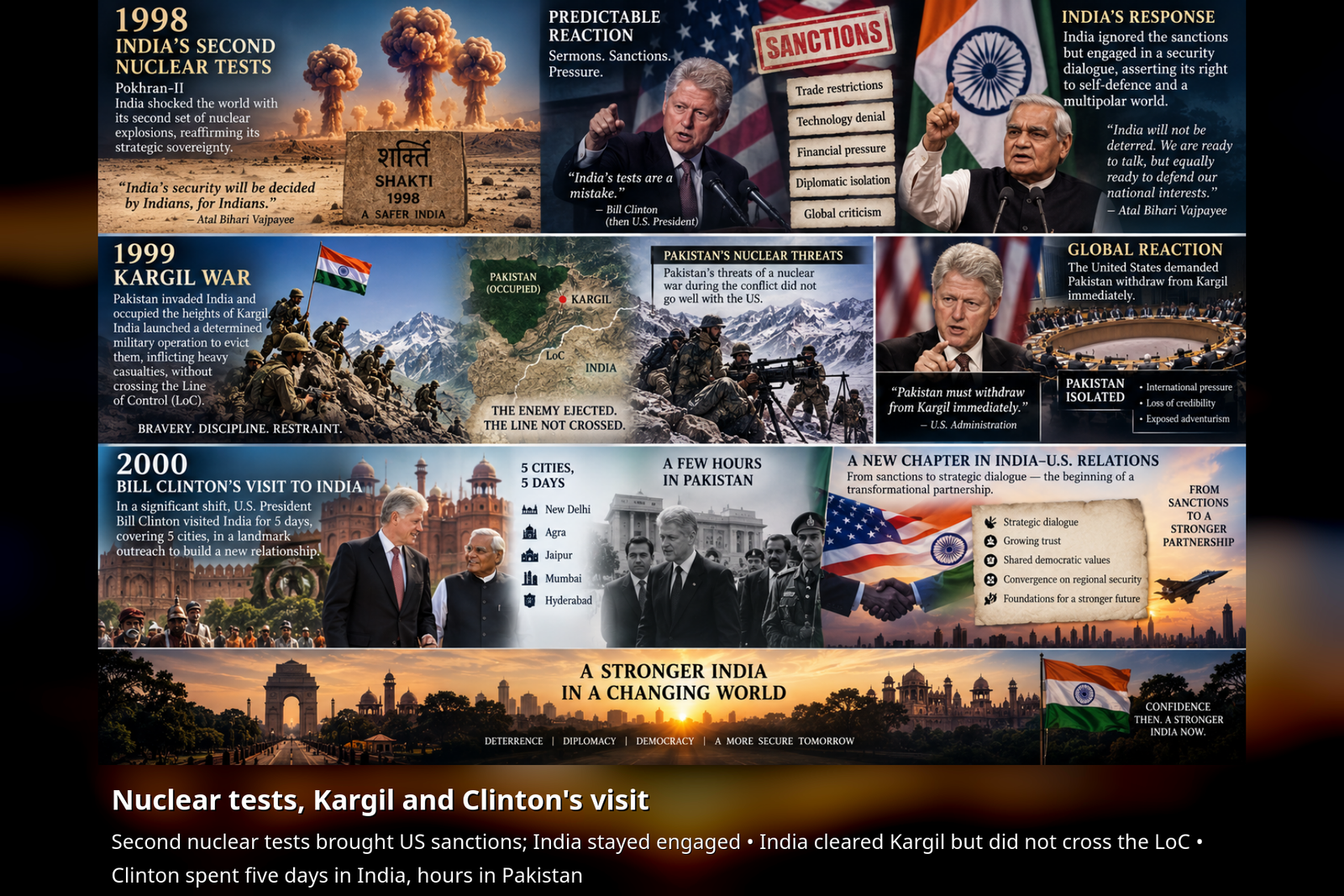
In the late 90s, India shocked the world with its second set of nuclear explosions…
In the late 90s, India shocked the world with its second set of nuclear explosions predictably inviting sermons and sanctions from the US. India ignored the sanctions but engaged in a security dialogue. In 1999, when Pakistan invaded India and occupied the heights of Kargil, India not only effectively ejected them from India, inflicting heavy casualties, but also refrained from crossing the Line of Control. Pakistan's behaviour during the war threatening India with a nuclear war did not go well with the US. The US demanded that Pakistan withdraw from Kargil immediately. This was followed by a visit in 2000 by US President Bill Clinton, who spent five days in India, visiting five cities, and a few hours in Pakistan.
Featuring:



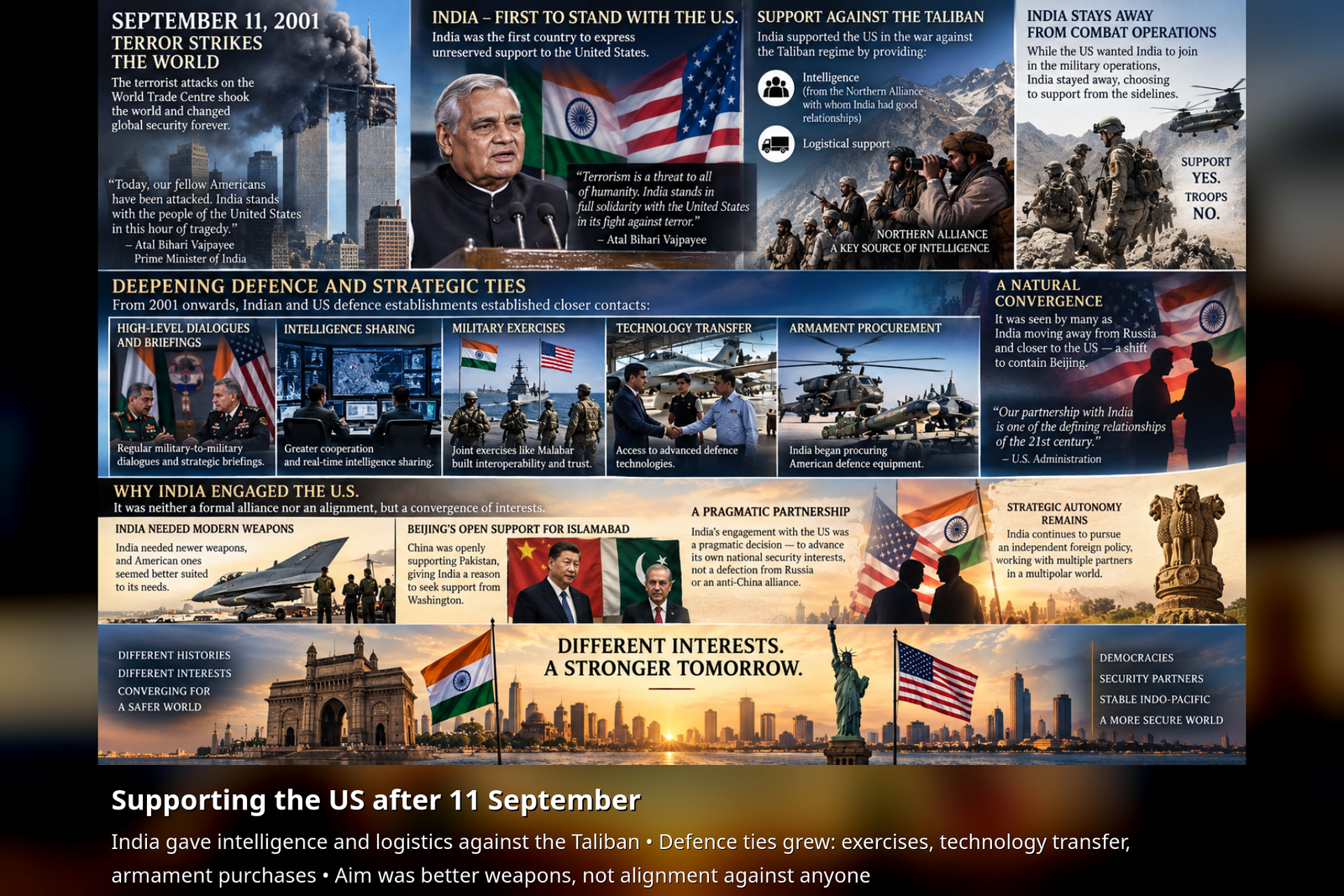
When the terrorists attacked the World Trade Centre on 11 September 2001, India was the first country that expressed unreserved support to the US. It supported the US on the war against the Taliban regime providing it with intelligence (from the Northern Alliance with whom India had good relationship) and logistical support. While the US wanted India to join in the operations, India stayed away. From that point, Indian and US defence establishments established more and more contacts with briefings, intelligence sharing, military exercises, technology transfer, and armament procurement. All this was seen by many as India moving away from Russia and China, and as India's alignment with the US to contain Beijing. Truthfully, it was neither. India needed newer weapons and the American ones seemed better, and Beijing was openly supporting Islamabad, so New Delhi wanted some support from Washington.
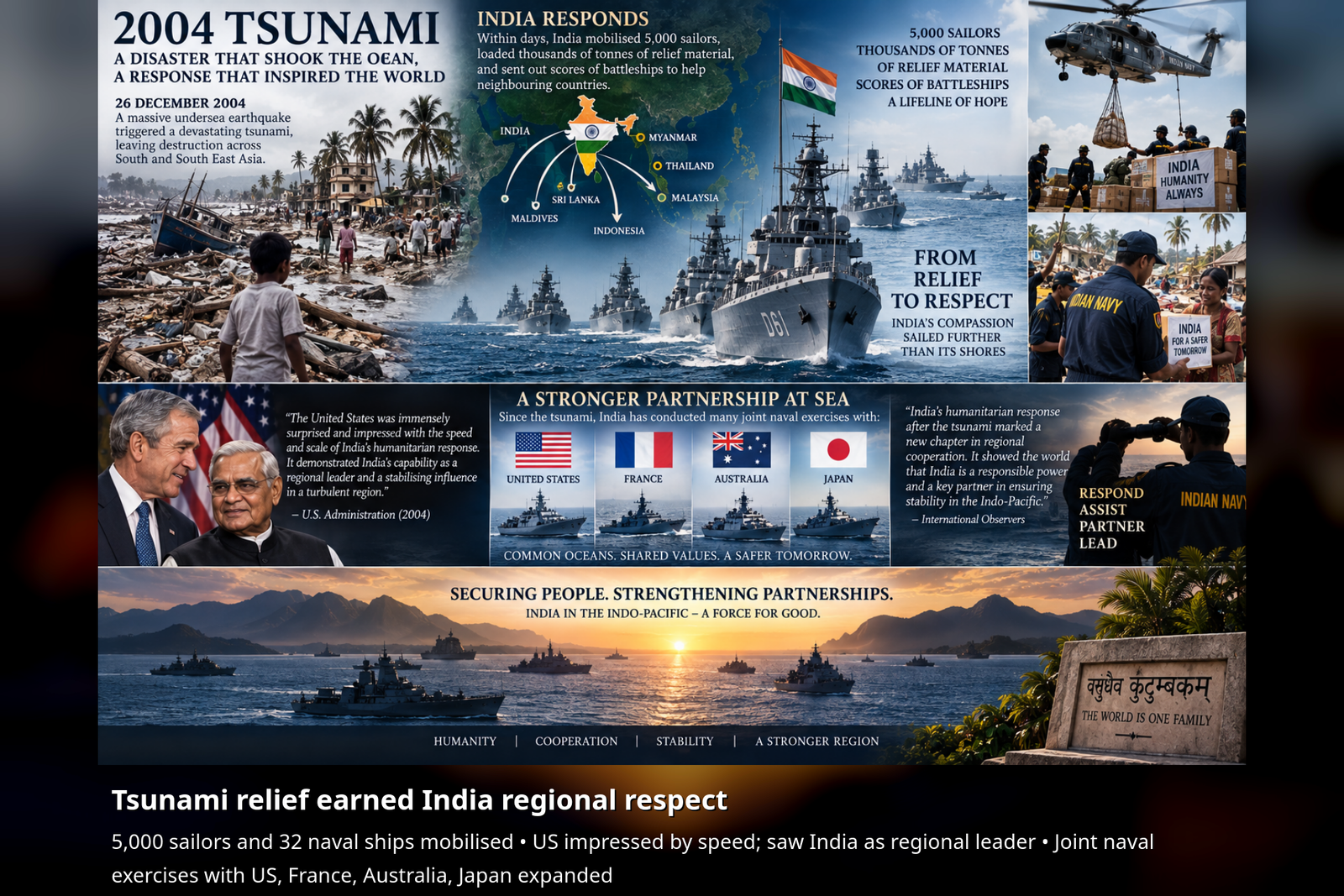
Right after the 2004 tsunami, India mobilised 5,000 sailors, loaded up thousands of tonnes of…
Right after the 2004 tsunami, India mobilised 5,000 sailors, loaded up thousands of tonnes of relief material, and sent out 32 naval ships to various South East Asian and South Asian countries. The US was immensely surprised and impressed with the speed of Indian action and for the first time started treating India as a regional leader and a stable influence in a turbulent area. Regular joint naval exercises with the US, France, Australia, and Japan have expanded since then.
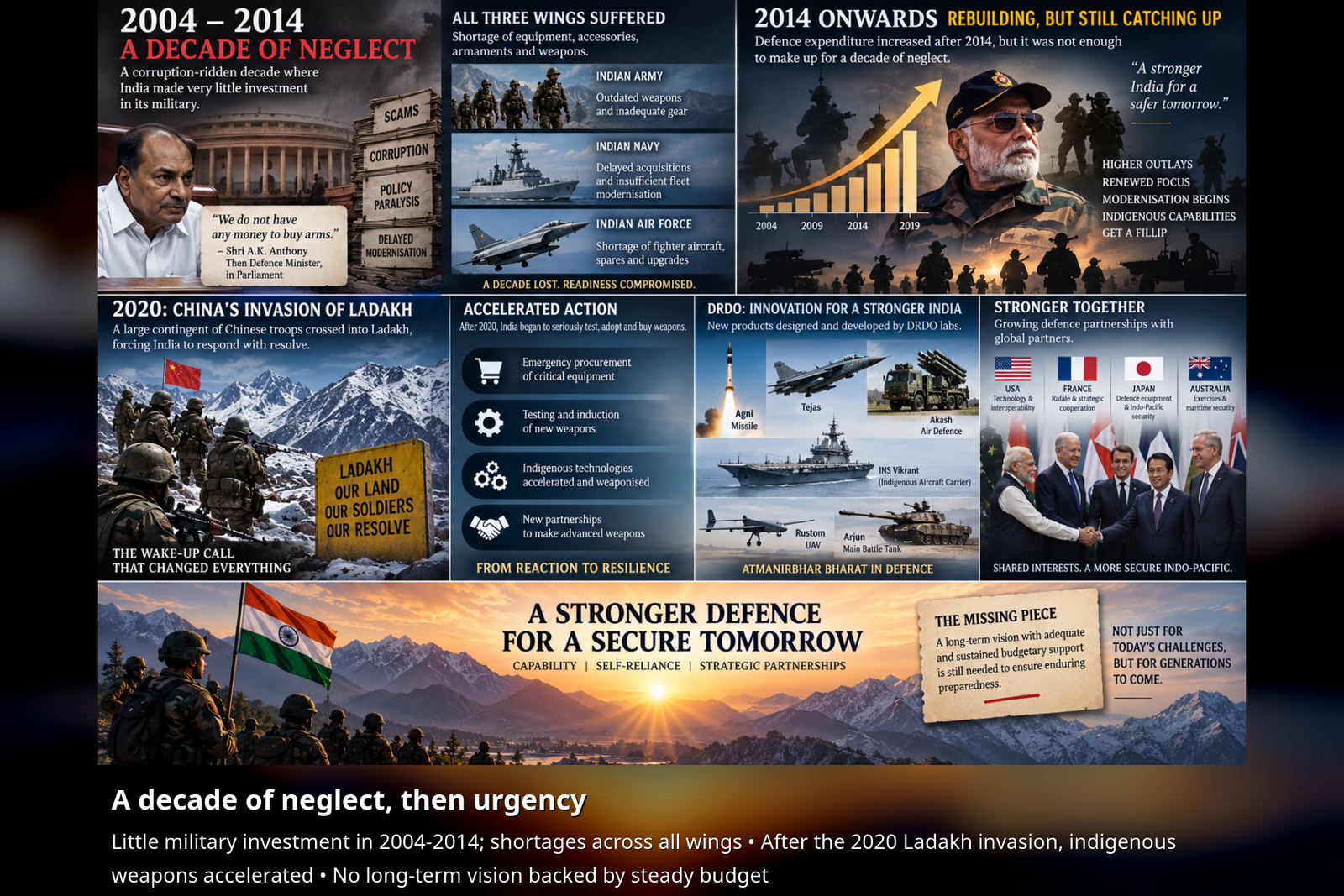
During the corruption-ridden decade from 2004-2014, India made very little investment in its military. The then Defence Minister Shri A.K. Antony told the media in February 2014 that there was no money left and that all major projects had to wait until 1 April. Hence, all wings of defence suffered immensely from shortage of equipment, accessories, armaments, and weapons. After 2014, defence expenditure was increased but not enough to make up for the previous decade of neglect. It was only after the 2020 invasion of Ladakh by a large Chinese contingent that India started seriously testing, adopting, and buying weapons. Indigenous technologies were accelerated and weaponised, products that had been kept pending were bought on an emergency basis, new products were being designed and developed by the Defence Research and Development Organisation (DRDO) labs, and new partnerships were set up to make new weapons. Unfortunately, there does not seem to be a long-term vision that is supported with adequate budget for a period of time.
Featuring:


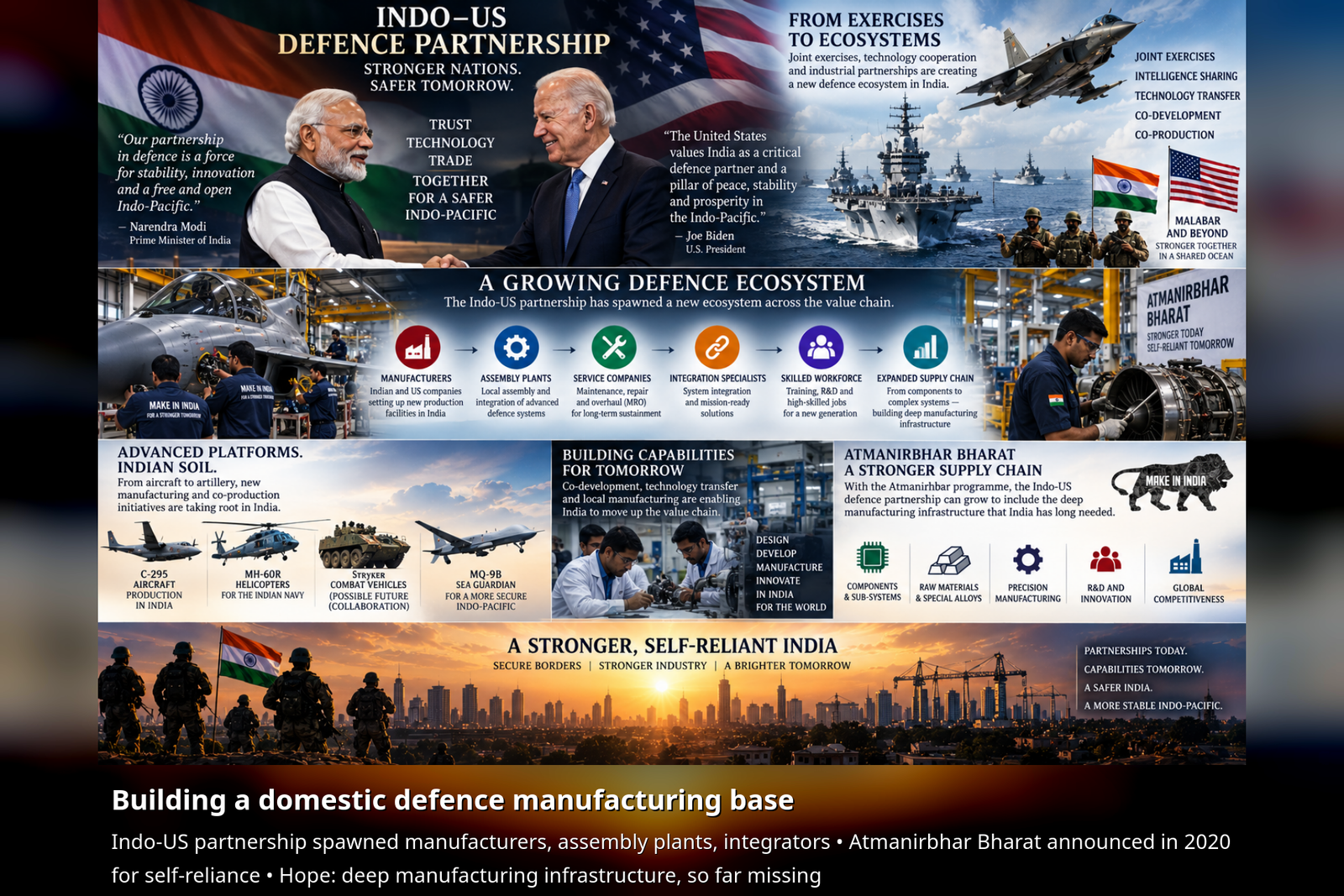
The Indo-US defence partnership has spawned a new ecosystem of defence manufacturers, assembly plants, service…
The Indo-US defence partnership has spawned a new ecosystem of defence manufacturers, assembly plants, service companies, and integration specialists. It is hoped that with the Atmanirbhar Bharat (self-reliance) programme, announced in 2020, this supply chain will grow to include deep manufacturing infrastructure that has been missing in India.
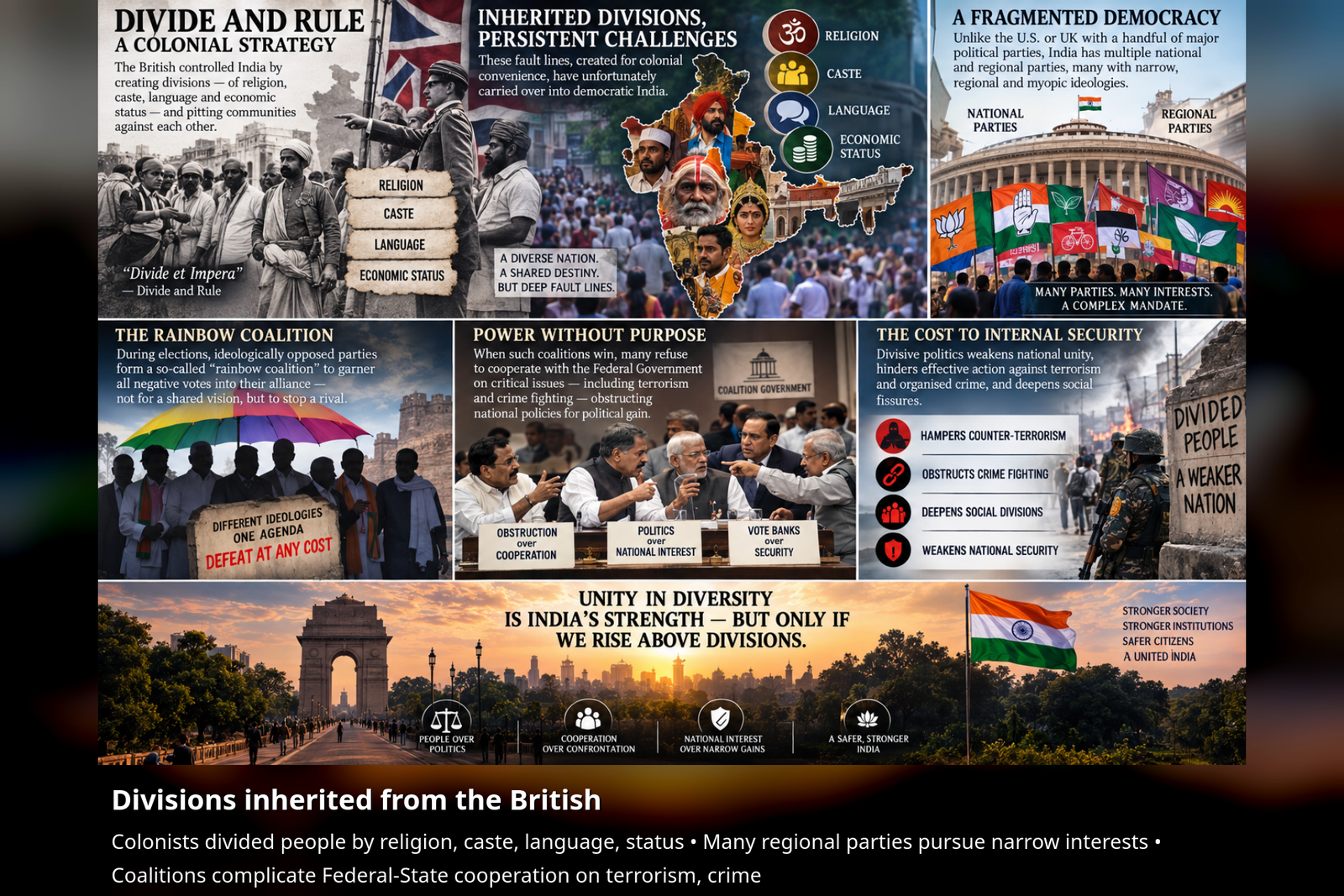
From an internal security standpoint, India suffers from a fractious democracy based on divisions inherited from the British. The colonists controlled India by dividing the population by religion, caste, language, and economic status and such divisions have been carried over into democratic India. Unfortunately, unlike in the US where there are only a handful of recognised political parties, India hosts multiple regional parties that have very myopic ideologies and interests. While they think they are the best for the people, their divisive tactics to come to power has created deep fissures in society. Worse, during elections, these parties form a so-called rainbow coalition to garner all anti-incumbent votes into their coalition. When they do win, they they often make Federal-State cooperation, even on critical issues such as terrorism and crime fighting, a major challenge. including terrorism and crime fighting.
Decades of pandering to such interests by some national parties have created pockets of disenfranchised…
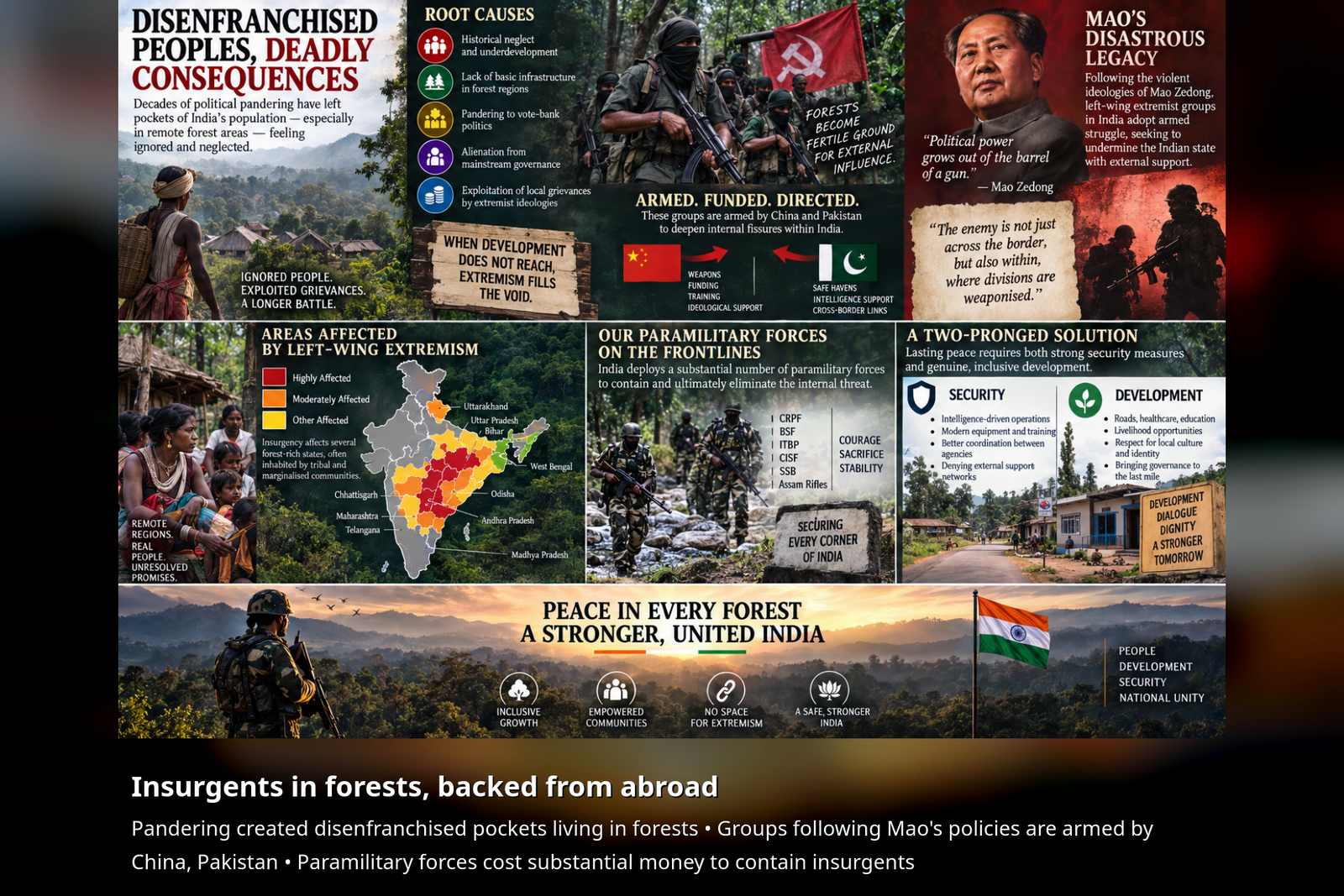
Decades of pandering to such interests by some national parties have created pockets of disenfranchised populations who live in forests and are easy pickings for external enemies of India. Having adopted the disastrous policies of Chinese leader Mao Zedong, these groups are armed by China and Pakistan to deepen the fissures within India. The country spends a substantial amount of money on paramilitary forces to contain these internal insurgents and ultimately eliminate the threat.
Featuring: