|
The Indian Analyst
|




South Indian Inscriptions |
EPIGRAPHIA INDICA in (the district of ) Koṇḍapaḍumaṭi ; and Oṅkadona in (the district of) Doḍḍikaṇḍravâḍi, (changing) their (names into) Jagamechchugaṇḍapuram.[1] We have exempted these agrahâras from all taxes.”
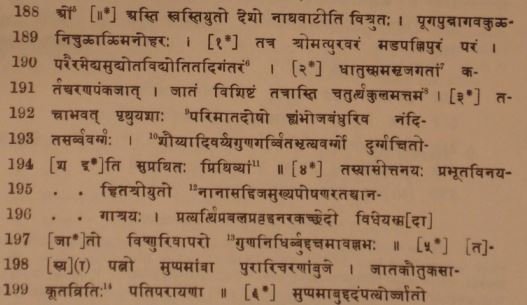
B.- Inscription of Bayyamâmbâ ; This inscription is engraved on the south face of the pillar, below the end of the inscription of Kêta II. It consists of 12 Sanskṛit verses and a passage in Telugu prose (ll. 215 to 220). This is another grant to god Buddha at Śrî-Dhânyaghâṭî (i.e. Amarâvatî), made on Thursday, the eleventh tithi of the bright fortnight of Jyêshṭha in Śaka-Saṁvat 1156 (expired), the cyclic year Jaya. According to Prof. Kielhorn, “ the date corresponds to Thursday, the 11th May A.D. 1234, when the 11th tithi of the bright half ended 3 h. 50 m. after mean sunrise.” The donor was Bayyamâmbâ (v. 11) or Kôṭa-Bayyalamahâdêvi (l. 216), the daughter of the Mahâmaṇḍalêśvara Rudradêva-Mahârâja (l. 215 f.) the son of Budda (v. 5) and grandson of Durga (v. 4), who belonged to the Chaturthakula (i.e. the Śûdra caste) and resided at Maḍapalli in the district of Nâthavâḍi (l. 215) or Nâthavâṭi[2] (vv. 1 to 3). From the word Kôṭa[3] which is prefixed to the name of Bayyalamahâdêvi in l. 216, it may be concluded that she was married to one of the chiefs of Amarâvatî. Verse 12, which is mutilated, contains the name of Manma-Gêta, i.e. ‘ the grandson[4] Kêta.’ This seems to refer to Kêta II. of Amarâvatî, the grandson of Kêta I. Very probably Bayyamâmbâ was one of the wives of Kêta II.
TEXT. _____________________________________________________ | ||||||||||||||||||||||||||||||||||||||||||||||||||||||||||||||||||||||||||||||||||||||||||||||||
 )º.
)º. º.
º. .
. º.
º. º.
º. .
. º.
º. is entered above the line.
 :.
:.
| > |
|
>
|