|
The Indian Analyst
|




North Indian Inscriptions |
INSCRIPTIONS OF THE SILAHARAS OF NORTH KONKAN
TRANSLATION Success! Obeisance to Vinayaka ! ..(Verse 1) Obeisance to you, O Lambōdara,—(you) who are always fond of mōdakas ! O God, remove (all) obstacles from all my undertakings at all times.
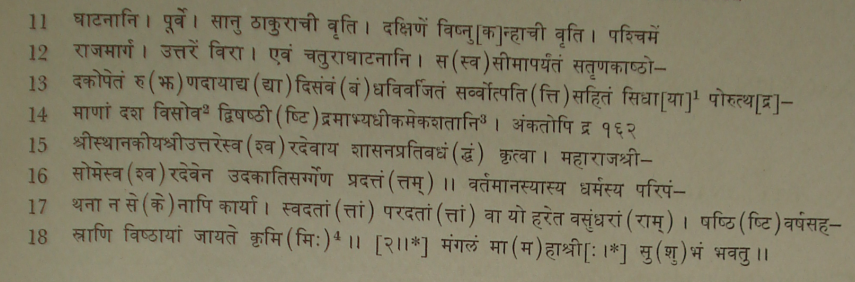
.. (Line 2) This day, here, during the beneficial and victorious reign of the Mahārājādhirāja, Kōṅkaṇachakravartī, the illustrious Sōmēśvaradēvarāya, who is adorned with all titles, while the Mahāmātya, the illustrious Jhāmpaḍaprabhu, the Mahāsāndhivigrahī Māināku, Bēbalaprabhu, Pōmadēpaṇḍita (and) the Senior Minister in charge of the State Treasury, (viz.) Gōvēnāku are bearing the burden of the cares of the two whole maṇḍala entrusted to them by his (i.e. the King’s) favour,—at such a time, when eleven hundred years increased by eighty-two have elapsed by the era of the Śaka king—in figures, the Śaka year 1182—in the (cyclic) year Raudra, on the occasion of a solar eclipse, on Monday, the 15th tithi of the dark fortnight of Chaitra, the Mahārāja, the illustrious Sōmēśvaradēva, has donated to the god, the divine Uttarēśvara of the prosperous (city) Sthānaka, with the pouring out of water, the land covered by the orchard in Kōṁthalē-sthāna in the village Chāṇḍijē situated near Uraṇa, the boundaries of which are as follows:—on the east, the field of Sānu Ṭhākura, on the south, the field of Vishṇukanhā, on the west, a royal road, (and) on the north, waste land —the land thus bounded on the four sides, together with grass, wood and water, exempted from all encumbrances and claims of debt, inheritance etc. and inclusive of all produce (and also) ten visōvas (and) the Pōruttha-drammas (numbering) a hundred increased by sixty-two—in figures, 162 drammas—after recording the gifts in a royal charter.
None should cause any obstruction to the present religious gift.
_____________________________________________________
|
|||||||||||||||||||||||||||||||||||||||||||||||||||||||||||||||||||||||||||||||||||||||||||||||||||||||||||||||||||||
| > |
|
>
|