The Indian Analyst
 

North Indian Inscriptions


Contents

Introduction

Preface

Contents

List of Maps and Plates

Abbreviations

Additions and Corrections

Images

Introduction

Political History

The Early Silaharas

The Silaharas of North Konkan

The Silaharas of South Konkan

The Silaharas of Kolhapur

Administration

Religious Condition

Social Condition

Economic Condition

Literature

Architecture and Sculpture

Texts And Translations  

Inscriptions of the Silaharas of North Konkan

Inscriptions of The Silaharas of South Konkan

Inscriptions of The Silaharas of kolhapur

APPENDIX I  

Additional Inscriptions of the Silaharas

APPENDIX II  

A contemporary Yadava Inscription

Index

Other South-Indian Inscriptions 

Volume 1

Volume 2

Volume 3

Vol. 4 - 8

Volume 9

Volume 10

Volume 11

Volume 12

Volume 13

Volume 14

Volume 15

Volume 16

Volume 17

Volume 18

Volume 19

Volume 20

Volume 22
Part 1

Volume 22
Part 2

Volume 23

Volume 24

Volume 26

Volume 27

Tiruvarur

Darasuram

Konerirajapuram

Tanjavur

Annual Reports 1935-1944

Annual Reports 1945- 1947

Corpus Inscriptionum Indicarum Volume 2, Part 2

Corpus Inscriptionum Indicarum Volume 7, Part 3

Kalachuri-Chedi Era Part 1

Kalachuri-Chedi Era Part 2

Epigraphica Indica

Epigraphia Indica Volume 3

Epigraphia
Indica Volume 4

Epigraphia Indica Volume 6

Epigraphia Indica Volume 7

Epigraphia Indica Volume 8

Epigraphia Indica Volume 27

Epigraphia Indica Volume 29

Epigraphia Indica Volume 30

Epigraphia Indica Volume 31

Epigraphia Indica Volume 32

Paramaras Volume 7, Part 2

Śilāhāras Volume 6, Part 2

Vākāṭakas Volume 5

Early Gupta Inscriptions

Archaeological Links

Archaeological-Survey of India

Pudukkottai

INSCRIPTIONS OF THE SILAHARAS OF NORTH KONKAN
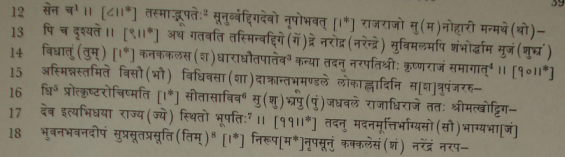
 

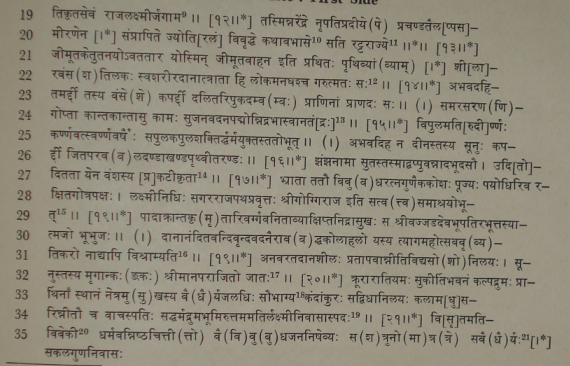
images/38

Second Plate : First Side

images/39

>
________________________________________________________________

[1] Metre of verses 8 and 9 : Anushṭubh.
[2] As Kielhorn pointed out, some words like जगत्तुंगस्य नृपते: are required in place of तस्माद्भूपते :.
[3] The Janjirā plates read धारापातधौतेव. Kielhorn suggested- धौतगात्रेव.
[4] Metre Mālinī.
[5] Kielhorn suggested the reading शत्रुपंजररुचि and conjectured that Kṛishṇarāja had been imprisoned by his enemies. The Janjirā plates (both Sets) show that the correct reading is शत्रुपंकजरुधि.
[6] Read शीतांशाविव.
[7] Metre : Śārdūlavikrīḍta.
[8] The Janjirā plates (Set II) read सुप्रभूतप्रभूतिं.
[9] Metre : Mālinī.
[10] The Janjirā plates (Set II) have a better reading, viz. कथावशेषे.
[11] Metre Upajāti.
[12] Metre : Vasantatilakā.
[13] Metre of verses 15& 16 : Mālinī.
[14] Metre : Anushṭubh.
[15] Metre : Vasantatilakā.
[16] Metre : Śārdūlavikrīḍita.
[17] Metre : Āyaā.
[18] Kielhorn read सौख्यस्य, but the aksharas do not support that reading.
[19] Read -स्पदम्. Metre: Śārdūlavikrīḍita.
[20] Read विश्रुतमतिवेको. The Janjirā plates (Set I) read विशदमतिविवेकी.
[21] The Janjirāplates (the same set) read सत्क्रमोत्तुंगधैर्य:.


<< - 52 Page

>
>